Analyzing Connections Between Probabilistic Modeling in Card Play and Symbol Sequence Dynamics in Unified Bonus Ecosystems
Written by Carlo Powell · Jun 25, 2026
Analyzing Connections Between Probabilistic Modeling in Card Play and Symbol Sequence Dynamics in Unified Bonus Ecosystems
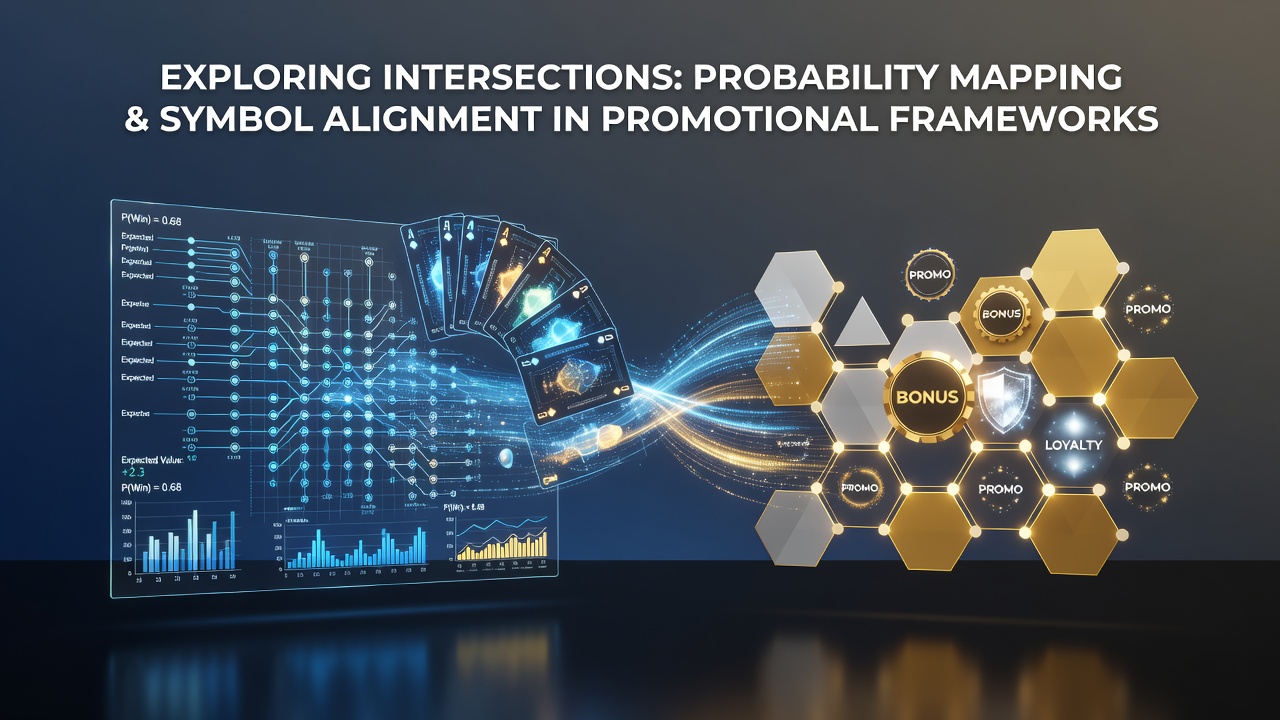
Probability mapping in card games relies on detailed tracking of remaining cards, conditional expectations, and variance calculations that shift with each draw. Observers note these same mathematical foundations appear when analysts examine symbol alignment patterns on digital reels, where weighted outcomes determine payout clusters within integrated promotional frameworks that layer bonuses across multiple game types.
Core Elements of Probability Mapping in Card Games
Card games such as blackjack require players and systems to maintain running counts of high and low cards while adjusting decisions according to remaining deck composition. Researchers have documented how these counts translate into expected value shifts that range from slight player edges to pronounced house advantages depending on penetration depth and rule variations. Studies further reveal that multi-deck environments compress these edges, forcing more precise mapping to maintain any statistical relevance over extended sessions.
Additional layers emerge when side bets enter the equation, each carrying independent probability distributions that interact with base game outcomes. Data shows operators track these distributions through backend algorithms that update in real time, creating dynamic promotional triggers tied directly to observed probability states rather than static thresholds.
Symbol Alignment Patterns on Reels and Their Analytical Overlap
Slot symbol configurations follow weighted probability tables where each reel position carries distinct likelihoods of landing specific icons. Analysts map these weights to forecast alignment frequencies for scatter symbols, wild substitutions, and bonus triggers. The resulting pattern matrices share structural similarities with card-count matrices because both rely on conditional probabilities that evolve as symbols or cards are revealed.
Integrated promotional frameworks capitalize on this overlap by designing bonus structures that reward sequential alignment events across card tables and reel games. One system might award free spins when a blackjack hand reaches a predetermined count threshold while simultaneously tracking reel cascades that mirror the same variance profile. This creates unified tracking environments where promotional eligibility depends on cross-game probability signatures rather than isolated performance metrics.

Integration Within Modern Promotional Architectures
Promotional frameworks now embed real-time probability engines that ingest both card-derived counts and reel alignment data. These engines adjust bonus multipliers, wagering requirements, and eligibility windows according to combined statistical profiles. Figures from industry reports indicate such unified systems reduce promotional leakage by aligning player incentives with measurable outcome distributions across game categories.
Regulatory developments scheduled for June 2026 in several North American jurisdictions require operators to disclose teh algorithmic weighting behind these cross-game promotions. Nevada Gaming Control Board documentation outlines forthcoming transparency standards that will mandate public reporting of how probability mappings influence bonus distribution. Similar requirements appear in draft guidelines from Canadian provincial authorities, emphasizing consistent treatment of card and reel data streams.
Practical Implementation and Data Handling
Implementation typically begins with centralized data lakes that store timestamped card outcomes alongside reel spin results. Pattern recognition modules then identify correlations between high-probability card states and subsequent symbol alignments that trigger bonus phases. Operators apply these correlations to set dynamic wagering multipliers that scale according to observed joint probabilities.
Case examples documented in academic literature demonstrate how one operator adjusted its integrated bonus engine after discovering that blackjack count spikes above +3 correlated with elevated scatter alignment rates on linked slot titles. The adjustment recalibrated bonus clearance thresholds, producing measurable shifts in player retention metrics without altering advertised return-to-player percentages.
Future Trajectories and Research Directions
Ongoing research at institutions such as the International Center for Responsible Gaming examines whether these intersections produce unintended concentration of play among subsets of users who master both mapping techniques. Preliminary models suggest that unified frameworks may amplify engagement loops when probability signals align across game types, though long-term behavioral data remains limited.
Technical refinements expected by mid-2026 include machine-learning overlays that refine mapping accuracy through continuous feedback from live promotional redemptions. These systems will further blur distinctions between card probability structures and reel symbol dynamics, potentially standardizing analytical approaches across the broader gaming sector.
Conclusion
The intersections between probability mapping in card games and symbol alignment patterns in promotional frameworks represent a convergence of analytical methods once treated separately. As operators refine unified engines and regulators introduce disclosure requirements around June 2026, the underlying mathematics will continue shaping how bonuses integrate across game categories. Observers expect continued evolution in data architectures that treat card counts and reel weights as interchangeable inputs within single promotional logic trees.