Blackjack Surrender Strategies Optimize Wagering Requirements in Combined Slot and Table Game Environments
Written by Yara Keller · Aug 11, 2026

Blackjack Surrender Strategies Optimize Wagering Requirements in Combined Slot and Table Game Environments
Digital casino platforms integrate blackjack surrender mechanics with slot game progressions to support players who navigate wagering requirements across multiple titles. Surrender allows participants to forfeit half their initial wager on unfavorable hands rather than completing the round, and this choice directly influences how funds move between table games and digital reels during bonus clearance periods.
Core Mechanics of Surrender in Digital Blackjack
Blackjack surrender appears in two primary forms across online platforms. Late surrender permits the option after the dealer checks for blackjack while early surrender grants the decision before that check occurs. Operators configure these rules through software providers that embed the feature into live dealer streams and random number generator tables alike. Research from the New Jersey Division of Gaming Enforcement shows that surrender reduces average house edge by approximately 0.08 percent when players apply the move correctly on hands totaling sixteen against a dealer ten.
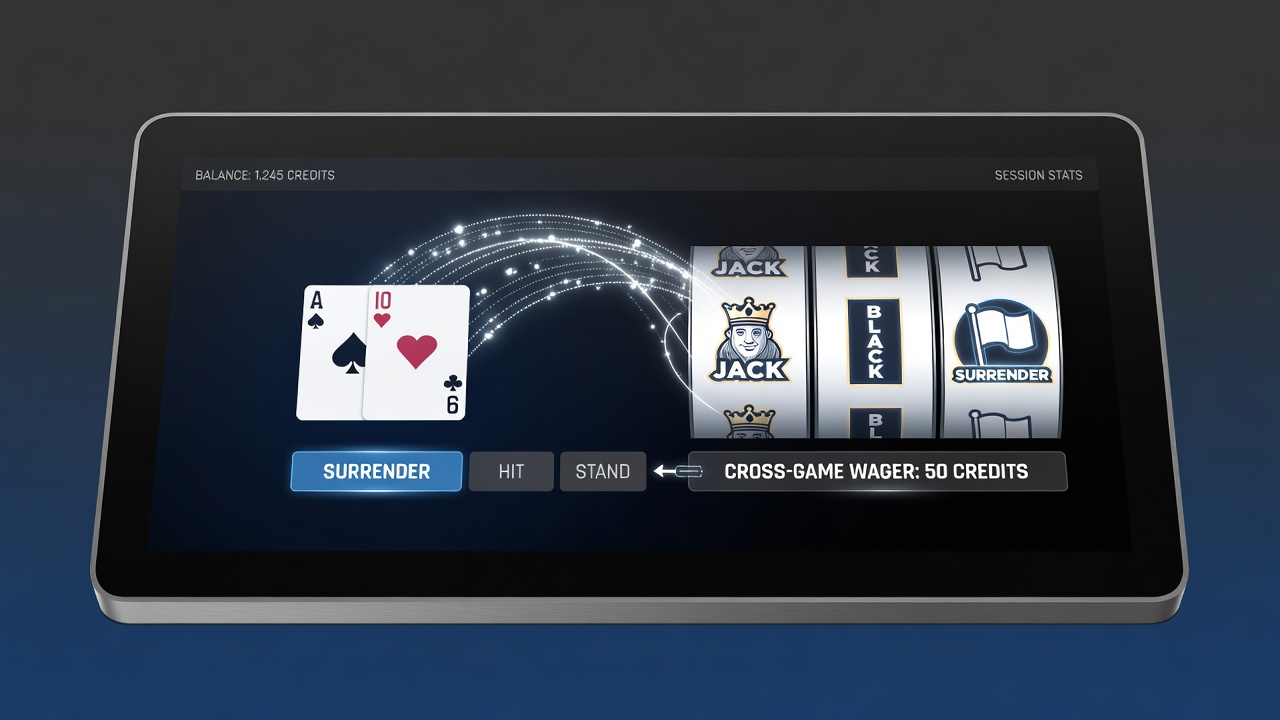
Players execute surrender through a single interface click that returns half the stake instantly to the balance. That returned portion remains available for immediate placement on other games without resetting progress toward playthrough thresholds. The process maintains continuity because most platforms count the surrendered amount toward total wagered figures even though the full bet never completes a standard resolution cycle.
Cross-Game Wagering Dynamics on Digital Reels
Slot machines and blackjack tables operate under separate contribution rates toward bonus wagering targets in many systems. Slots often contribute 100 percent while table games contribute between 10 and 20 percent depending on the operator agreement. Surrender decisions help stabilize bankroll levels so that remaining funds can shift to high-contribution reel games without triggering large swings that might exhaust the balance before requirements clear.
Consider a scenario where a player holds a sixteen against a dealer ace on a live table. Choosing surrender preserves half the stake and avoids a likely full loss. The retained capital then transfers directly into a progressive jackpot slot where spins advance the overall wagering meter at a faster rate. Data from the Australian Gambling Research Centre indicates that players who incorporate surrender into their sequences complete mixed-game playthrough targets 12 to 15 percent more efficiently than those who play every hand to completion.
Integration with Bonus Structures Effective August 2026
Regulatory updates scheduled for August 2026 in several North American and European jurisdictions require clearer disclosure of game contribution percentages and real-time tracking of cross-game wagers. These rules encourage platforms to refine surrender interfaces so that players receive immediate feedback on how each decision affects remaining requirements. The changes also mandate that surrender actions appear in session histories alongside slot spin counts to support transparent auditing.
Software developers respond by embedding surrender prompts that calculate projected wagering impact before the player confirms the move. Such tools display remaining playthrough amounts in both table and reel categories simultaneously, allowing seamless transitions without manual recalculation. Observers note that these interface improvements align with broader industry shifts toward unified wallet systems that treat all eligible wagers as cumulative regardless of game category.
Practical Application Across Platform Types
Mobile applications and desktop clients implement surrender through consistent button layouts that mirror physical casino procedures while adding digital confirmation layers. Live dealer environments stream the decision in real time so that the half-bet return processes before teh next shoe shuffle. RNG tables apply the same logic within automated rounds that complete in seconds. Both formats feed results into a shared wagering ledger that updates contribution totals across slots and tables without separate submissions.
Case examples from platform analytics reveal that sessions incorporating surrender at optimal moments maintain steadier balance curves. This stability permits longer sequences of slot play that satisfy volume-based requirements while still returning to blackjack tables when specific table-side promotions activate. The pattern repeats across multiple operator environments because the underlying surrender mathematics remains constant even as visual themes and reel mechanics vary.
Conclusion
Blackjack surrender functions as a precision tool within digital ecosystems that blend table decisions with reel outcomes. By limiting exposure on statistically poor hands, participants preserve capital that continues to advance unified wagering targets. Platform updates scheduled for August 2026 further embed these mechanics into transparent tracking systems, ensuring that cross-game movement occurs without interruption to bonus progress. The approach relies on established probability models and standardized contribution frameworks rather than variable player intuition alone.