Mapping Probability Alignments Between Blackjack Decision Trees and Slot Cascade Multipliers in Wagering Clearance Processes
Written by Carlo Powell · Jul 19, 2026
Mapping Probability Alignments Between Blackjack Decision Trees and Slot Cascade Multipliers in Wagering Clearance Processes
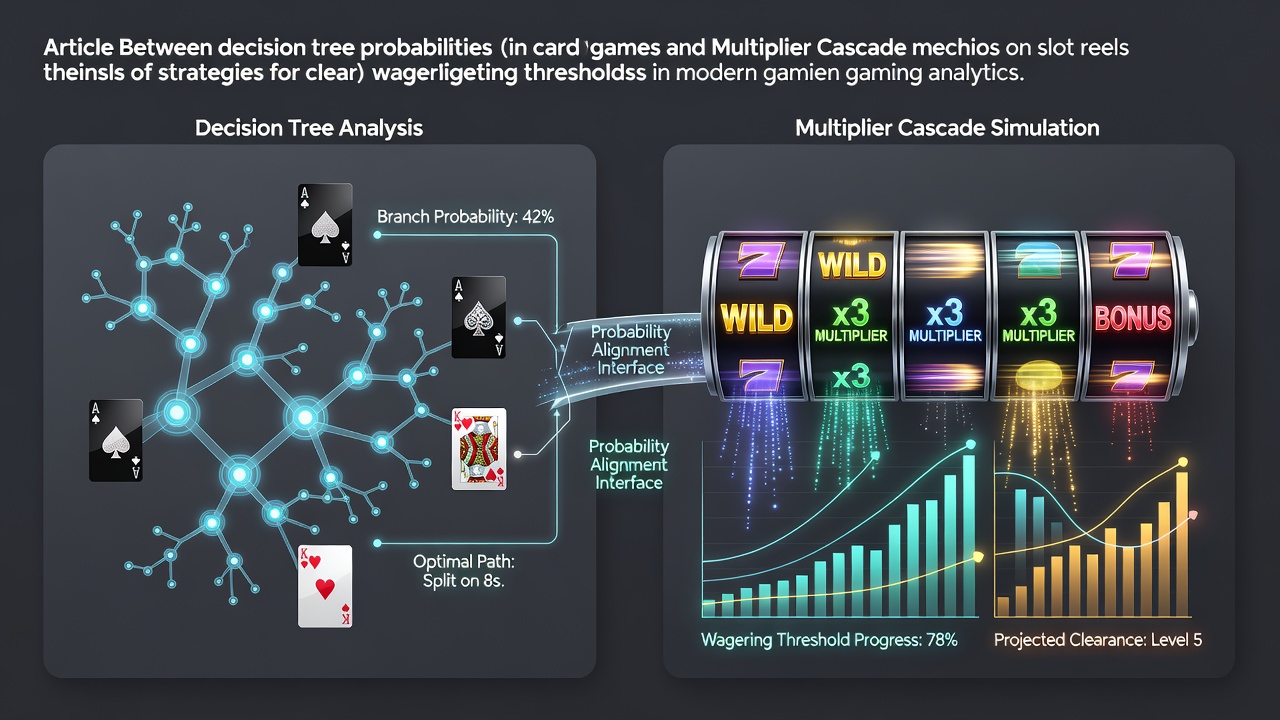
Decision trees in card games such as blackjack provide structured frameworks that map possible outcomes based on player choices and dealer actions, while multiplier cascades on reels generate sequences of amplified wins through successive symbol alignments. Observers note that alignments between these systems emerge when probability calculations from tree branches correspond to cascade trigger rates, allowing systematic approaches to meeting wagering thresholds on combined gaming platforms.
Core Mechanics of Decision Trees in Card Games
Blackjack decision trees outline every possible move including hit, stand, double, or split, with each branch weighted by remaining deck composition and known dealer upcards. Researchers at academic institutions have modeled these trees using combinatorial mathematics that accounts for card removal effects and payout structures, creating layered probability nodes that shift dynamically as hands progress. Data from multiple studies shows that optimal tree paths reduce house edges to ranges between 0.5 and 2 percent depending on rule variations across different jurisdictions.
Those who apply these trees consistently track conditional probabilities at each decision point, factoring in split opportunities and insurance bets when applicable. The structure supports repeated evaluation of expected values, which in turn informs bankroll allocation during sessions that incorporate bonus funds subject to wagering conditions.
Multiplier Cascades on Reels and Their Probability Profiles
Slot reel cascades operate through chained reactions where winning symbol groups disappear and new symbols fall into place, often applying successive multipliers that compound across the sequence. Industry reports from regulatory bodies in regions such as Nevada indicate that cascade frequency depends on reel strip design and random number generator configurations, with average trigger rates documented between 15 and 35 percent per spin in many commercial titles. Multiplier values typically begin at 1x and escalate through additional layers, creating extended outcome distributions that differ markedly from single-spin mechanics.
Analysts have observed that higher volatility titles incorporate deeper cascade chains, which extend session duration and alter the distribution of returns relative to total wagered amounts. These patterns become relevant when operators impose thresholds that require a defined multiple of deposits to be played through before withdrawals are permitted.
Identifying Alignments Between the Two Systems
Alignments surface when the branching probabilities in card game trees mirror the layered multiplier escalations in cascades, particularly in how both frameworks distribute returns across multiple steps rather than isolated events. For instance, a blackjack double-down branch that doubles exposure on favorable counts parallels a cascade sequence where an initial win unlocks higher multipliers on subsequent drops. Studies from Canadian research centers have quantified such correspondences by comparing variance profiles, revealing overlaps in the way expected values accumulate under repeated application of each mechanic.
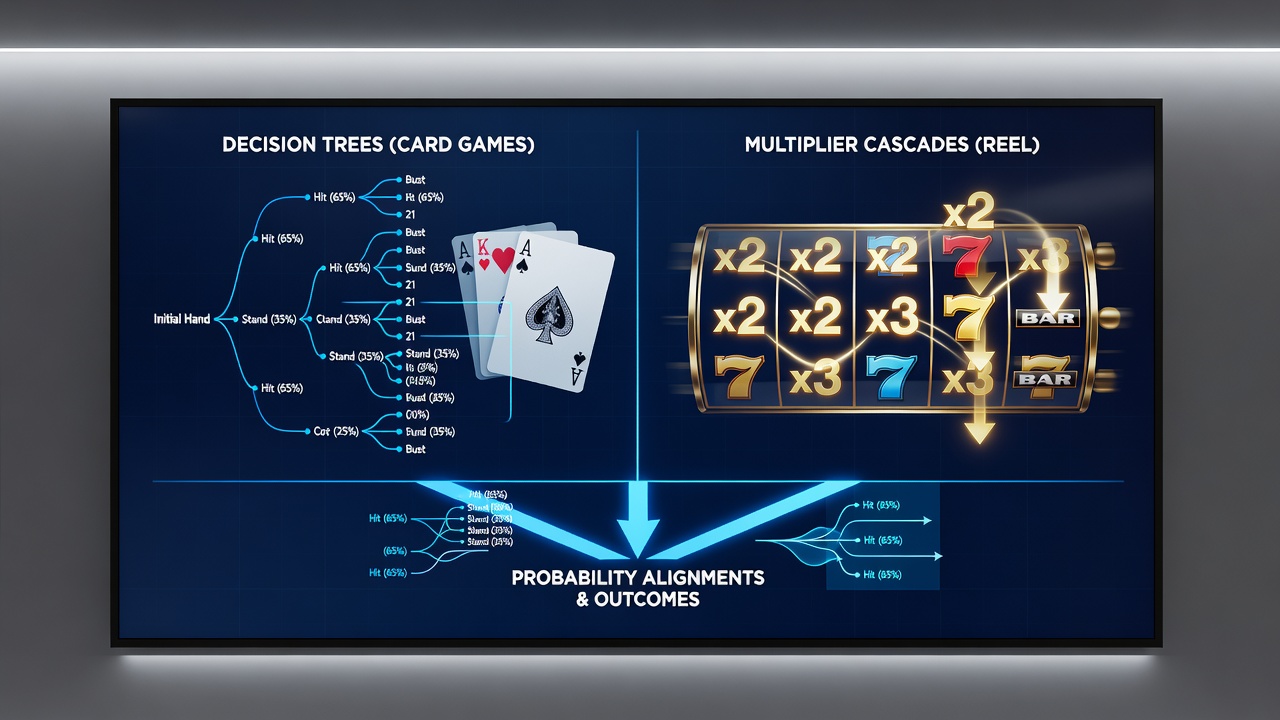
Software developers sometimes embed shared random seeds or synchronized payout tables across platform sections, which further tightens these alignments. Operators in several markets have introduced hybrid interfaces where live dealer decisions feed into slot bonus rounds, allowing tree-based choices to influence cascade outcomes directly. Figures from European gaming associations document increased player retention on such integrated systems because the combined mechanics provide more granular control over wagering progress.
Application to Wagering Threshold Clearance
Wagering thresholds require players to cycle a specified amount through games before bonus funds convert to withdrawable balances. Decision tree calculations enable precise estimation of expected loss rates per hand, while cascade multipliers allow forecasting of accelerated contribution when chains extend beyond base levels. Combined modeling shows that alternating between the two can stabilize contribution rates, because the lower variance of tree-optimized card play offsets the higher variance spikes from extended cascades.
Regulatory timelines set for July 2026 in multiple jurisdictions will require updated machine certifications that verify accurate tracking of contributions across both game types. Platforms must demonstrate transparent logging of each decision branch and cascade layer to ensure compliance with contribution rules. This shift encourages operators to publish clearer probability disclosures that highlight how tree and cascade alignments affect threshold completion timelines.
Take one documented platform integration where players alternate between basic strategy tables and cascade-enabled reels within the same account session. Contribution meters update in real time, reflecting both the steady accumulation from card play and the burst contributions from multiplier chains, which together produce more predictable clearance intervals according to internal operator metrics.
Future Developments and Regulatory Context
Academic papers published in 2025 examined cross-game probability mapping tools that import live blackjack count data into slot simulation engines. These tools generate projected contribution curves that account for both systems simultaneously, reducing uncertainty around threshold completion. Government agencies in Australia and several EU member states have begun reviewing such tools for potential inclusion in responsible gaming frameworks.
Industry organizations continue to explore standardized APIs that would allow third-party auditors to verify alignment accuracy between decision trees and cascade engines. As hardware upgrades proceed ahead of the 2026 certification deadlines, developers are incorporating more sophisticated random number generators that preserve the statistical independence of each mechanic while exposing alignment points for analysis.
Conclusion
Probability alignments between card game decision trees and reel cascade multipliers offer structured pathways for managing contributions toward wagering thresholds. Data from regulatory sources and academic modeling indicates that these correspondences enable more consistent tracking of expected outcomes across game types. Continued refinement of certification standards scheduled for July 2026 will likely formalize how operators present and audit these alignments, supporting transparent operations in integrated gaming environments.